SuperFasting Guide
Quick Clean-Up at a Cellular Level
Belly fat, Arteries, Liver, Joints, Gut
Metabolism, Mood, Energy, Sleep
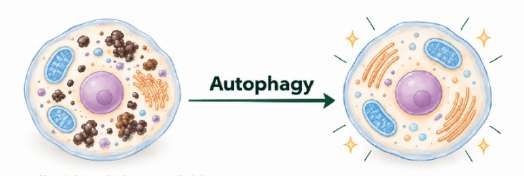

Quick Clean-Up at a Cellular Level
Belly fat, Arteries, Liver, Joints, Gut
Metabolism, Mood, Energy, Sleep
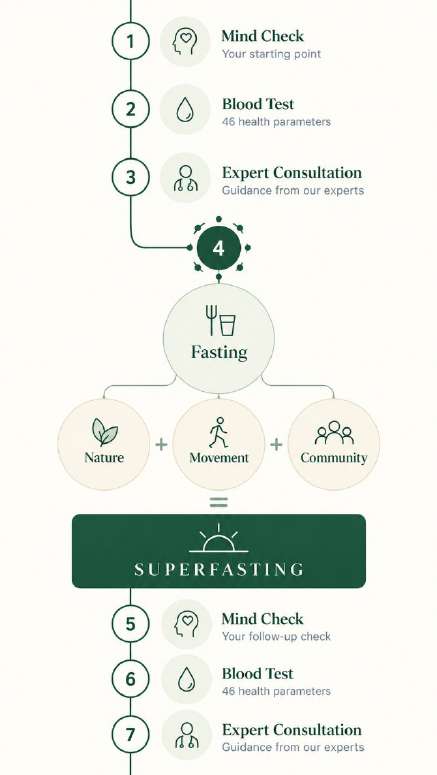
SuperFasting effect is assessed on following body parameters and psychological and biological markers – before, during and after.
Cognitive Clarity, Emotional Resilience, Somatic Balance, Meaning & Engagement Future Orientation
Blood Pressure, Resting Pulse, ApoB, LDL Cholesterol, HDL Cholesterol, Triglycerides
HbA1c
hsCRP
Vitamin D, Vitamin B12
Weight, BMI, Visceral Fat, Belly Balance, Physical Resilience, Body Age The actual effect varies from individual to individual. Following figure indicates our recent observations. Full details available on SuperFasting App or on this link.
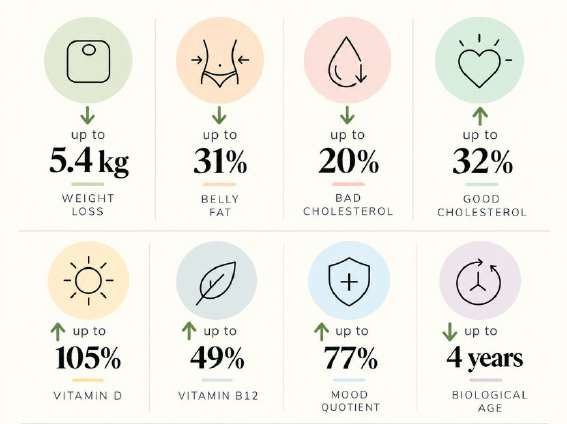
SuperFasting is based on scientific studies,
Both of them stayed in a forest-lab for over a decade, and it is through that rigorous work the SuperFasting protocol got developed. Understanding the scientific principles behind the SuperFasting makes the process much more effective.
The foundational dimensions are:
Dehydration is aging, and death.
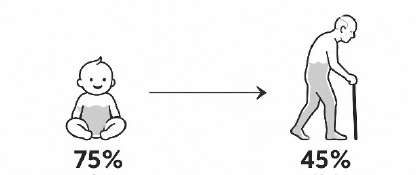
Dehydration makes blood stickier. Most of us are more dehydrated while getting up, and this may contribute to early morning fatigue and cardiovascular stress. Besides accelerated aging, dehydration also shows up as:
Caffeinated - tea, coffee, colas - and alcoholic beverages suck the water out of the body.
Many religious practices involve water restricted fasting. It is probably because they are optimized for salvation, nirvana or post-death world. SuperFasting is for life, in the heathiest sense. Keep hydrated, stay alive, stay young.
In 2016, Japanese scientist Yoshinori Ohsumi was awarded the Nobel Prize in Physiology or Medicine for his discoveries of mechanisms for autophagy. ‘Autophagy’ literally means ‘self-eating’ which relates to recycling and clean-up, at a cellular level.
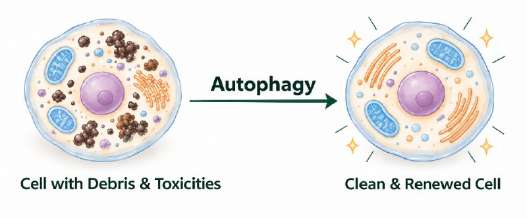
Disruption of this process accelerates aging, and many aging linked diseases including diabetes, parkinsonism and
cancer. Keeping autophagy fine-tuned is keeping clean, young and new.
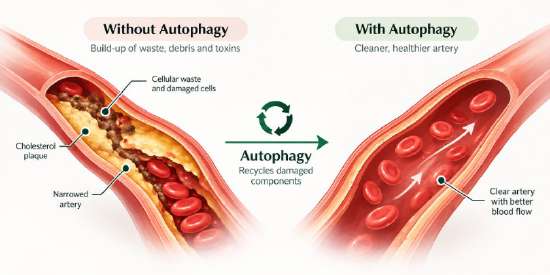
Prolonged fasting is one of the strongest physiological conditions associated with increased autophagy. Prolonged, because the deeper work happens during a metabolic shift known as ‘ketosis’ which takes 2-3 days to set in. Likewise, when fasting is done in a forest- like setting, the effect is much cleaner and
deeper. In the forest gene-switches work better, hormones operate in harmony, forest is the primary home for life. Cities contain toxicities and distortions.
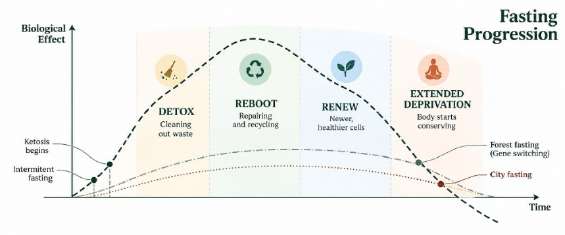
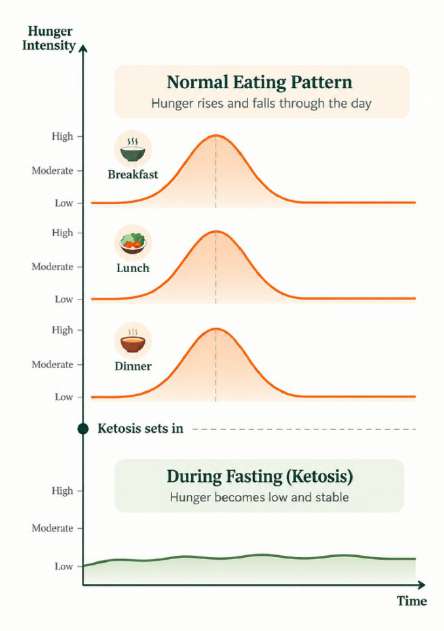
With the thought of ‘fasting’ the prominent pop-up is ‘hunger’. The mind goes ‘skipping
term/ intermittent fasting. In prolonged fasting glucose level becomes stable as soon as ketosis sets in.
There are many life forms on our planet, ranging from viruses and bacteria to human beings. The two most visible forms are Plants and Animals. The major design difference in these two forms is of ‘mobility’. Plants are supposed to be staying at one place, their whole life. Rain and sunshine come to them and they have apparatus to synthesize food. On the contrary, Animals do not have the photosynthesis apparatus. They are required to find their food, and in the course, safeguard themselves from becoming someone’s food. To meet this foundational need, animals have mobility. Humans are smart animals, we have secured
have also invented many automobiles; hence mobility, through our own limbs, is hardly a necessity. But our biology hasn't yet caught up with this industrial revolution. It is still primitive. It has not evolved to cope with modern 'sitting. Most modern ailments can be linked to
To address this biological disarray, we invented artificial forms of mobility—Yoga, gym, exercises and many more. But they are not a perfect substitute for our innate biological design—the real, purposeful mobility.
Forest hiking, which has some difficulty and some uncertainty, is the closest natural
mobility and has significantly more powerful effect than yoga, gym or other artificial exercises. The second-best option is productive physical labour in an ecologically balanced environment e.g. farming, which we call Green Workout. It doesn’t mean you should stop your regular yoga, gym or exercise routine; it has its place. During SuperFasting, we intend to go more natural, more authentic.
In Hindi there is a powerful saying ‘बिन श्रम खाये चोर कहाए’ ‘eating without earning is forgery/theft’. And importantly, here ‘physical labour’ is the real labour, not the mental labour, which we often find glamourous and superior.
We are animals, not plants. Let’s get our act clean. We aren’t designed for all-day sitting.
A minimum of 90 minutes daily mobility is necessary to keep our biology well-oiled, and 3 hrs if intention is to improvise. During the SuperFasting 6 hrs is what we look for.

This vitamin is in limelight these days. Some scientists think it is wrongly classified as a ‘vitamin’ — it is more than that; it behaves like a ‘hormone’. It affects not only bone health, but almost every system in the body and is strongly related to depression and heart health. Deficiency of Vitamin D is widespread. It’s a sunshine vitamin and in less sunny places, most people are deficient. But even in India, a sunny country, large urban population is deficient. The reason is a social taboo around being in the sun. Being dark-skinned is considered ‘uncivilized, unfair or unlovely’, while being white-skinned - ‘fair and civilized’. This is to the extent that India has big skin-whitening market and a popular brand has been ‘Fair & Lovely’).
One doesn’t need to get this vitamin through food; our body has a mechanism of synthesising its own. The precursor is cholesterol and when bare skin is exposed to sunshine Vitamin D forms.
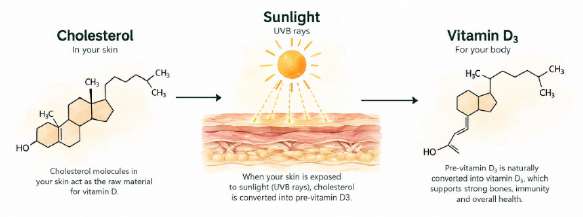
Blocking this biochemical process results in two issues — increased cholesterol and deficient Vitamin D, potentially contributing to both – cardiac issues and depression.
Vitamin D deficiency is a sign of something much bigger — ‘outdoor deficiency’. Sunshine and outdoors are also linked to switching on and off hundreds of human genes. By not exposing ourselves to sunshine and outdoors we are compromising the functioning of those many genes. Vitamin D supplementation can help us get better blood numbers, and can also help in some way, but it is tiny; it is eyewash. The real deficiency is ‘outdoor deficiency’, and it should be fulfilled by being outdoors.
The linkage of sun exposure and health is more complicated than simply saying — sun
is bad. In the same way as — germs are bad, dirt is bad, fat is bad. Small amounts of sunlight are useful for Vitamin D production and gene regulation. Excessive UV exposure, however, damages the skin. The answer is not to fear the sun. It is to understand it.
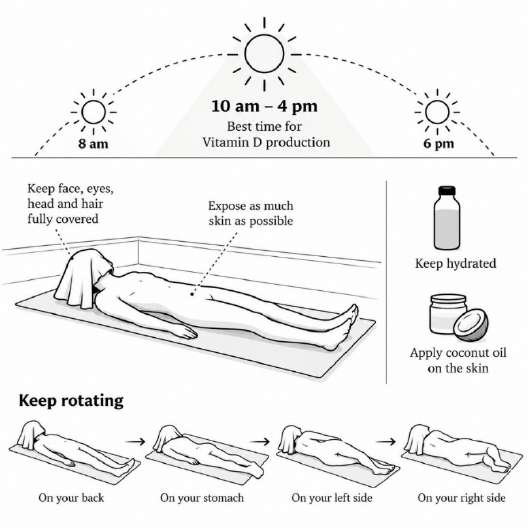
It is the brighter sun that converts cholesterol to Vitamin D. The effect is best between 10 am and 4 pm — yes, fairly between standard office hours. Ideally, being fully unclad, lying down, and keeping the face, eyes, head and hair covered works best. The duration depends on skin types, sun intensity, clouds, temperature, wind, etc., and needs to be calibrated. It could be as short as 10 minutes and as long
as 1 hour, depending on the individual and the conditions.
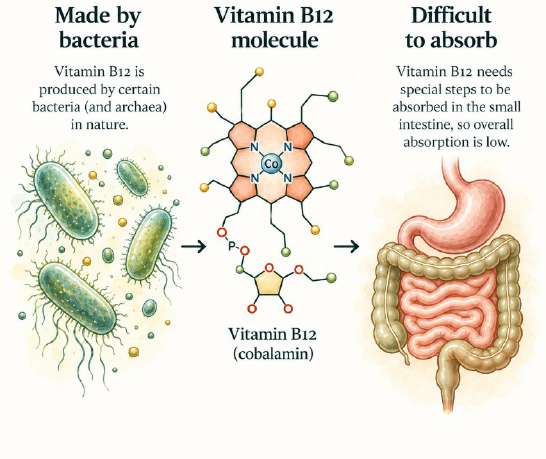
Vitamin B12 is yet another new age civilizational deficiency. This vitamin is vital to the nervous system, blood formation and DNA processing. Anxiety and other psychological changes can be among its manifestations. In fact, there are many who have deficiencies
cheerful – despite being on the fast. We have a hypothesis around it ‘Bio-Happiness Hypothesis’. There are three things we should know about this vitamin:
‘Microbiome’ is yet another buzzword like ‘autophagy’ in health circles. After decades of hating germs, we are now realizing – of
course there are some germs that make us sick, but there are many more which are good for us. In fact, life may not be possible without them.
Most allergies, autoimmune issues and cancers have a connection to microbiome, and it has been found that changing
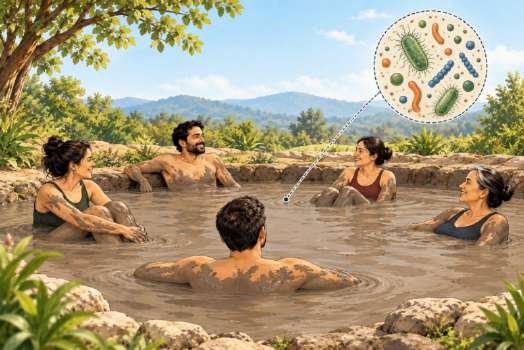
microbiome can change health in dramatic ways. All the bacteria that live with us — in our gut, body cavities, and on our skin — are collectively referred to as the ‘microbiome’. It is a kind of our internal forest, with a complex ecosystem, and any damage takes years to replenish. Hence, we should be cautious of things that claim to kill 99% of germs – whether toothpaste, soap or any other sanitizer, we do not need to use such things blindly and excessively. We should let our microbiome become rich and diverse.
As said earlier in our framework B12 deficiency is a signal of ‘Poor Microbiome
and Gut Health’ and this could be affecting many things, including the ‘gut feelings’. Hence, having B12 injections or tablets could show up as good blood numbers. The smarter approach is to boost microbiome and gut health.
The following practices help boost microflora:
Like ‘Germs’ ‘Cholesterol’ is yet another misinformed and feared word. Cholesterol is one of the foundational materials in body. Quite a lot of it is present in Brain. It’s important for Cell the integrity
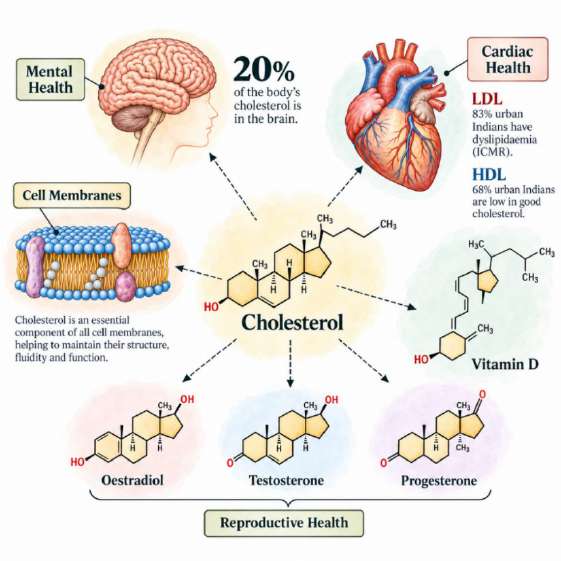
Hence, rather than merely worrying about LDL numbers, we should be looking at the larger story. Can LDL be reduced by taking low
No necessarily. Cholesterol is a foundational material. We need quite a lot of it, and there are two huge factories inside us – 1) in liver, and 2) in brain. Hence, it is immaterial whether you are taking low cholesterol food or high. Is it a good idea managing LDL with
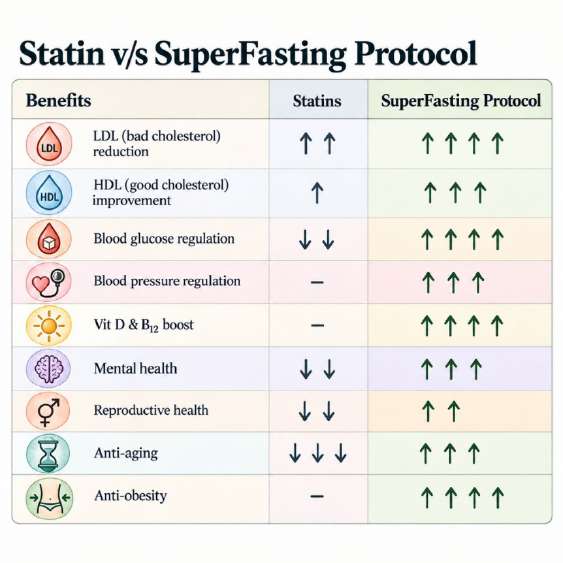
Statins are in extensive use for lowering LDL. The problem, from our perspective, is that they suppress the overall synthesis of cholesterol—and this is one reason we question whether suppressing the pathway is the smartest long-term approach.
In our participant observations: we are finding SuperFasting wholesomely resetting the cholesterol pathways.
All of us develop abnormal cells from time to time, but our smart immune system quickly destroys many of them. When system weakens, the cells keep multiplying to form cancer, although it takes years for those cells to become the disease. In 1931, German physiologist Otto Warburg was awarded the Nobel Prize in Physiology or Medicine for his work on cellular respiration. His later work revealed something remarkable about cancer metabolism: cancer cells consume large amounts of glucose and convert it to lactate even when oxygen is available. This became known as the Warburg Effect.
This is where fasting becomes interesting. During fasting, glucose levels, insulin and growth factors go down and ketone bodies go up as the body moves from growth mode to upcycling mode.
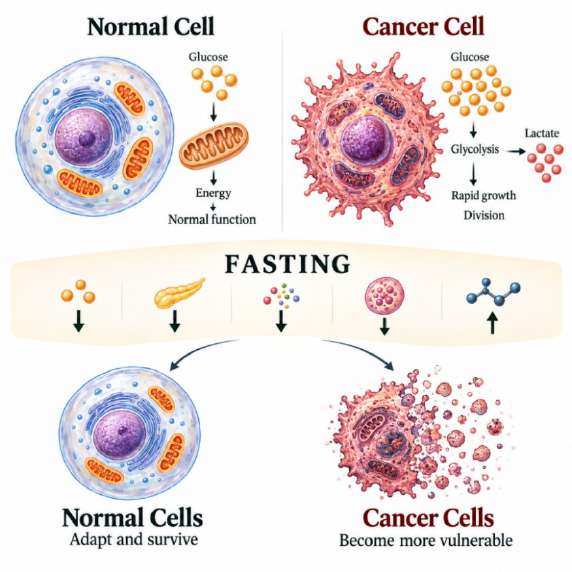
Normal cells adapt to this quickly, but cancer cells may be less able to adapt. Lot of research is going on to figure out:
Outcomes are interesting. There are studies suggesting that fasting may enhance the effects of some cancer treatments and may reduce some treatment-related side effects. It is a rapidly evolving area of research. Could metabolic fasting become another tool in our fight against
Quite a lot of human happiness is biological, and for long it was given as humans lived in nature. The whole effort of last several decades has been on boosting social happiness – money, relationships, spirituality etc. – and we progressed in it. However, in the course, we have been losing biological component. This could be why so many of us feel restless despite being socially well off.
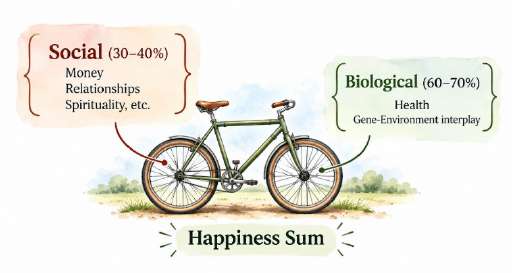
At Moodforest we are trying to look at it in
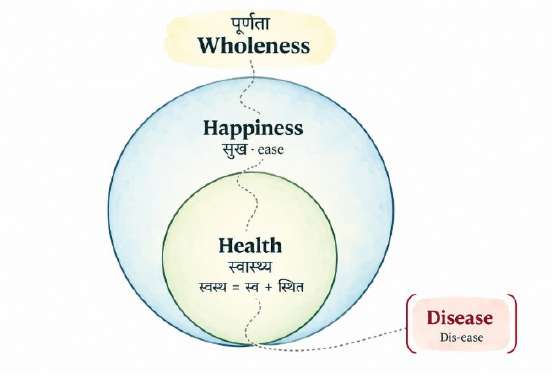
SuperFasting is not just fasting there are many components to it – and the most importantly it can happen only in proper Ecological & Psychological Environment. The key questions in most people have, are:
No, it cannot happen online or at home as it requires very specific Ecological & Psychological Environment and lot of Supervision and Support.
Anyone who is not bedridden, or is not under active medical care can do it. The program is very personalized to suit individual abilities. The bottom line is – it feels mild challenge – not something very difficult or dangerous. The core principle is - the individual should feel more energetic and powerful by each day.
The program is currently being offered in a forest campus (Bhoomi Eco Village) near Bangalore. The facility is a 22-acre organic farm, and has all the modern amenities for safe and comfortable stay. The day schedule subject to individual needs and weather, a common out line is as follows: Day 0 — Arrival/ Settle in · orientation · baseline checks Days 1–7/ SuperFasting/ The core residential experience Day 8/ Departure/ Completion · review · transition home A typical SuperFasting day: 6:00–8:30 am/ Cognitive Forest walk with a psychologist 8:30–9:00 am/ Morning log
9:00–11:00 am/ Vitamin D–boosting & epigenetic nature exposure 10:00 am–12:00 pm/ Cardio-metabolic movement 12:00–1:00 pm/ Vitamin B₁₂ & immunity- boosting pool session 1:00–3:30 pm/ Rest & personal time 3:30–5:00 pm/ Check-ups & technical sessions 5:30–7:00 pm/ Body-clock tuning sunset sit-out 7:00–7:30 pm/ Evening log 8:00–9:00 pm/ Life Circle Round the clock/ Autophagic fasting Organic meals & rejuvenating drinks are provided as required by your individual protocol.
Yes, you can. You get internet connectivity and time.
You don't need to achieve anything today. Just arrive.
What brought me here?
What would make these 7 days worthwhile for me?
One thing I want to practise
If I find this difficult… What usually helps me stay with something when it gets
uncomfortable?
The first day is not about being good at fasting. It is about beginning to notice.
Something my body did today that I didn't expect?
Notice what happens when you observe a sensation rather than immediately reacting to it.
When did hunger feel strongest?
By now, the experience may be changing. Notice it without trying to force a particular experience. Some enter into ketosis in the beginning of day 3, some at the end.
Compared with Day 1, what feels different?
By day 4 everyone is in ketosis. Ketosis brings a big shift in overall metabolism. You might notice it in hunger, mood and energy. Hydration is the key, and when the balance is right, many people begin to feel surprisingly good.
Is my body odour changing? Am I attracting
butterflies?
This is where SuperFasting is different from intermittent or short fasting. You are now several days into a prolonged metabolic state, with the body adapting to the absence of regular food intake.
This is the phase in which we are particularly interested in cellular clean-up, recycling and renewal.
You have now spent several days observing yourself. Look back as well as inward.
I came here thinking…
Now I am noticing…
You could be breaking your fast today, getting the first fruit bite. It might taste very different than earlier. Your taste buds could have become very sharp.
How did you feel with the food?
The camp ends. The process continues. The biochemical shifts that have happened will continue bringing more changes, and we got to handle in a manner the effect continue becoming deeper.
After a week, you’ll be filling online MQ, and after another you will have a blood sample taken, thereafter, we’ll compile the results and have
Do not forget to login your personal link, now most conversations will happen digitally.
SuperFasting is primarily a clean-up and renewal process. You are going home as a new- person. Health is no longer being an effort. You are स्वस्थ (स्व + स्थित) situated in your Self. Health is now your Home state, an effortless zone, a fun zone.
Will I lose the effect once I’m back home?
No. I’ll not go back to become the old version of myself.
What changed for me?
Body
Mind
My relationship with food / fasting
My relationship with nature / outdoors
Which practice do I want to continue?
What could make this difficult at home?
What will I do when that happens?
My one commitment to myself For the next 30 days, I will…
This guide is a physical companion to the SuperFasting App
©Moodforest LLP, 2026 Unintended usage and circulation prohibited.
www.moodforest.co +91-8602525887
MOODFOREST · SUPERFASTING